
A New Standard for Local Care: Inside Wooster Community Hospital’s Trauma-Informed ER Expansion
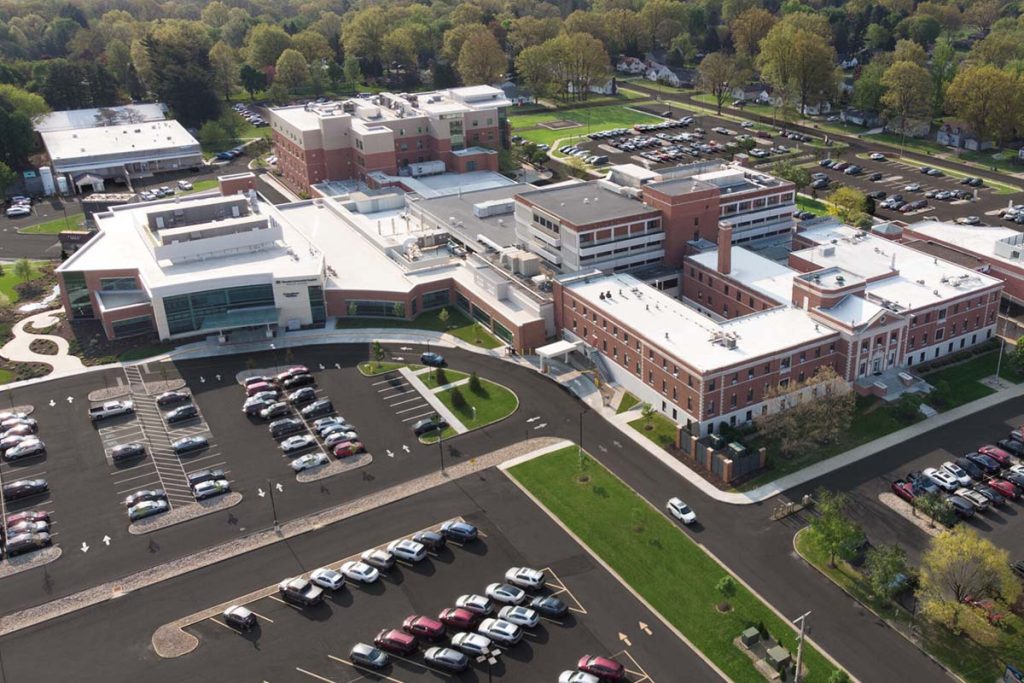
In February, the doors will open to the newly expanded Emergency Department (ED) at Wooster Community Hospital (WCH). To most of the community, it will stand as a feat of modern architecture and medical capacity. But for the leadership at WCH, this project represents something much deeper: a three-year journey to create a trauma-informed sanctuary for community members facing their darkest moments.
OneEighty is proud to continue its longstanding partnership with Wooster Community Hospital as the hospital expands its Emergency Department with a thoughtful focus on behavioral health, substance use, and patient dignity. While the design and development of the new space were led by the hospital, the expansion reflects a shared understanding that emergency medical care works best when it is connected to mental health support, substance use treatment, and victim advocacy services. Alongside OneEighty and other community partners, WCH is building a stronger, more humane response for individuals and families across Wayne County and beyond.
Kim Booth, the WCH Emergency Room Director, noted, “I really just hope that people really understand that both of our organizations care about their well-being and want to help them, whatever their struggle or issue, medical need, or mental health need is.”
A New Emergency Department Built for Today’s Community Needs
The new Emergency Department at Wooster Community Hospital represents more than a larger footprint. It represents a shift in how emergency care is delivered.
At the heart of the expansion is a dedicated Behavioral Health area, designed specifically for patients experiencing mental health or substance use crises. Inspired by the nationally recognized emPATH unit model, this space moves away from isolating patients in beds and instead offers a calmer, more dignified environment.
Key features of the new behavioral health space:
- Reduced Stimulation: Designed to be a calming environment away from the disjointed pace of the main trauma bays.
- Common Areas: Stable patients can congregate, watch TV, or work on puzzles rather than being confined to a hospital bed for days while waiting for placement.
- Dignity and Basic Needs: The area includes dedicated showers and restrooms to address essential needs vital to the healing process.
- Family Privacy: Two new family consult rooms allow social workers to deliver news or discuss treatment plans in private, away from the waiting room.
“The existing ER was not built to handle behavioral health patients effectively,” said Shelly Huff, COO and Chief Nursing Officer at WCH. “We thought, how can we make this a better experience that’s more humane?”
With trauma-informed care and design at the forefront, the new space prioritizes both patient dignity and staff safety, addressing the realities of rising healthcare violence while fostering de-escalation and respect.
“Ideally, with that space, we hope to reduce patients needing to be restrained. We hope to reduce patients escalating because we’re minimizing situations that would cause a crisis,” explained Julie Johns, WCH Emergency Room Department Manager.
Why OneEighty and Wooster Community Hospital Came Together
This partnership between WCH and OneEighty didn’t happen by chance. It was driven by years of community health needs assessments, which consistently identified behavioral health and substance use as critical gaps in local care.
WCH’s independence is key to this collaboration. Unlike larger systems in Cleveland, Akron, or Columbus, the hospital remains locally governed and deeply invested in serving the people who live here.
“Larger systems just don’t care about the community like we do,” Shelly Huff shared. “Being independent allows us to respond directly to what our neighbors actually need.”
For OneEighty, the partnership aligns seamlessly with its mission to provide comprehensive support for individuals affected by addiction, domestic violence, sexual assault, and mental health challenges. Rather than duplicating services, the organizations focus on medical stabilization at the hospital, followed by coordinated community-based care through OneEighty and other community partners.
Integrating Mental Health and Substance Use Care from the Start
Behavioral health and substance use needs were not added as an afterthought at the new Wooster County Hospital emergency department; they shaped the planning process from day one.
The Behavioral Health area was developed with input from a multidisciplinary team that included emergency clinicians, social workers, behavioral health professionals, and community partners. The goal was clear: reduce environmental stressors, improve outcomes, and create space for healing.
The RAMP Program (Rapid Access Medical Preparation)
RAMP is the frontline of addiction response. Wooster Community Hospital’s RAMP (Recovery and Medication Program) already averages about 30 patients per month, sometimes more, who require medical stabilization related to substance use. The new Emergency Department will allow this work to expand safely and effectively.
- OneEighty Staffing: A social worker is on-site 20 hours a week for psychosocial assessments.
- Peer Supporters: Individuals with lived experience engage patients, offering a unique level of connection that clinical staff alone cannot provide.
- Treatment Navigators: Weekend staff ensure that those admitted on a Friday aren’t waiting through the weekend without a plan.
SART & Domestic Violence Advocacy
For victims of domestic violence or sexual assault, the collaboration provides a specialized Sexual Assault Response Team (SART).
- The Nurse: A WCH SANE (Sexual Assault Nurse Examiner) collects forensic evidence with expert care.
- The Advocate: A OneEighty volunteer advocate provides emotional support and essential needs, such as clean clothing.
- Law Enforcement: Local officers work alongside the SART to uphold rights, secure the scene, and preserve vital information.
“We are not in a position to do inpatient behavioral health,” Shelly Huff explained, “but we can stabilize people medically and then partner with OneEighty to make sure they don’t fall through the cracks.”
The partnership between WCH and OneEighty ensures that when medical stabilization ends, the recovery journey begins. This is not a “hand-off” but a simultaneous embrace. As Bobbi Douglas, OneEighty Executive Director, shared, “It’s been one of the more seamless partnerships that I think that we’ve had… we’ve worked through problems when they’ve come up. And that’s the way I like to work.”
Overcoming Stigma and Looking Forward
Historically, stigma was a barrier to care for those with substance use disorders. Bobbi Douglas recalled a time decades ago when some medical staff resisted treating detox patients. Today, that culture has been replaced by one of profound empathy.
“I know that the stigma still exists, but I feel like we’ve taken a lot of that out. Our staff treats these patients with dignity and respect. I know that the staff have just really embraced that patient population. And I believe, it’s the same for behavioral health. I feel like that’s not even really an issue [internally],” Shelly Huff added.
The Next Frontier: Dual Diagnosis
Leadership, along with The Counseling Center of Wayne and Holmes Counties, is already looking toward the future, exploring a partnership to treat dual diagnosis patients, those struggling with both psychiatric and substance use disorders simultaneously. By sharing medication protocols and expertise, both organizations aim to address one of the community’s remaining gaps.
“It’s been identified… as we just went through a community planning process… dealing with people that have both psychiatric and substance use disorders,” explained Bobbi Douglas. “Because we don’t have a good way to do it right now.”
What This Emergency Care Expansion Means for Our Community
As the opening approaches, WCH (recently named to Forbes’ Top Hospitals) and OneEighty want the community to know:
- Safety is a Priority: The facility is designed to ensure safety for patients, visitors, and staff.
- You Don’t Have to Leave Your Community: There is no need to drive to Cleveland or Akron for crisis care. The experts and advocates are right here in Wooster.
- An Open Door: If you are hesitant or afraid to reach out, know that this space was built with your dignity in mind. This is a no-judgement zone.
“I really just hope that people know both of our organizations care about their well-being,” said Kim Booth. “Whatever their struggle or medical need or mental health need is, we want to help.”
Together, OneEighty and Wooster Community Hospital are building a safer, stronger, more responsive system of care, one person, one moment, and one partnership at a time.
Wooster Community Hospital Emergency Room Open House
Join us for an open house at Wooster Community Hospital’s new Emergency Center on Saturday, February 14th. This is a great opportunity to see firsthand how this enhanced facility will improve care and impact our community.
OneEighty Resources
For those encountering a substance use crisis, please call OneEighty’s Substance Use Crisis hotline, available 24 hours per day, 365 days per year, at 330-466-0678. For other resources, click the links below: