
From Loss to Light: Strategies for Holiday Relapse Prevention and Dealing with Grief
The holiday season is often painted as a time of joy, togetherness, and celebration. Yet, for many in Wooster and Wayne County, it’s a time when loss, whether the death of a loved one, the loss of a relationship, or the loss of a life defined by substance use, becomes heavier. At OneEighty, we understand that these magnified feelings can pose a serious risk to recovery.
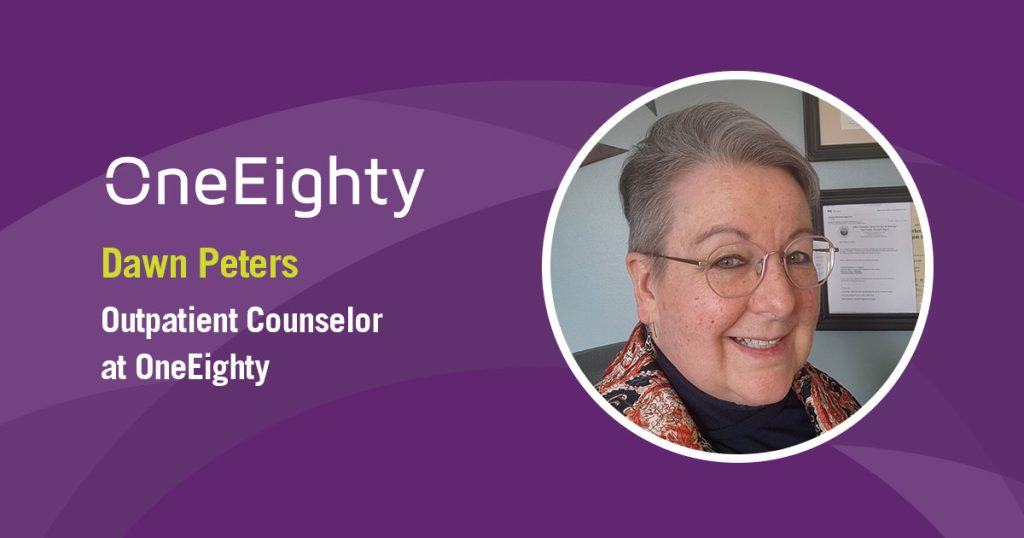
That is why we offer specialized, sensitive support designed to help clients navigate these complex emotions without resorting to old coping mechanisms. We spoke with Dawn Peters, an Outpatient Counselor at OneEighty, who channels her expertise to lead a specialized grief group, particularly during this challenging time of year.
When Grief is Magnified: The Twofold Loss of Addiction
For our clients, grief is rarely a singular event. Individuals in addiction recovery often face a double loss: grieving a person or a former life, while simultaneously grieving their drug of choice.
As Dawn Peters explains, many who are newly sober are losing a relationship they relied on. “Everybody who is in addiction has lost their drug of choice,” she notes. “If you think about your best friend, who do you call when you’re celebrating? Or when you’re having a bummer of a day, you call your friend because they can cheer you up. That’s also when people use.” Losing that “best friend” leaves a profound void that can be agonizing during emotional holiday triggers.
Furthermore, grief is often complicated by guilt and shame. Clients may struggle with the grief recovery of a parent who died while they were incarcerated, or a friend who overdosed while they survived. These are issues compounded by the stigma and difficulty of addiction.
The Unique Grief of Domestic Violence
Dawn’s grief group, which serves individuals across addiction and domestic violence services, also recognizes the complex grief of abuse. In these situations, a person may experience relief after the death of an abuser; a feeling often followed by intense guilt.
Dawn reassures clients that complex feelings are valid, offering essential validation: “Sometimes a person will experience relief, and I let them know that’s normal, and that’s okay because they’ll think that they’re horrible people because they feel relieved.”
An 8-Week Journey: A Road Map for Grief Recovery
This grief group, offered exclusively to clients at select times throughout the year, was created from Dawn’s extensive background in Clinical Pastoral Education and her chaplaincy experience at institutions such as the Cleveland Clinic and Ohio State Wexner Medical Center. It provides a structured path toward healing, intentionally addressing the isolation and emotional turmoil that often contribute to holiday-related relapse prevention challenges.
Week 1: The Grief Dance
Dawn teaches that grief is not a linear process, but a continuous cycle of feelings. While Elizabeth Kubler-Ross outlined five stages — denial, bargaining, anger, depression, and acceptance — Peters calls it the “stages of grief dance.” She is firm with her clients on the ultimate goal: “The only place you can end up in is acceptance, and that’s the important part.”
Crucially, she gives her clients permission to experience their feelings without judgment: “You’re allowed to visit them, just don’t stay there. Move. Keep moving until you can move back to acceptance.”
Weeks 2-7: Core Coping Skills for Holiday Relapse Prevention
During this phase, participants engage in hands-on strategies that are vital for maintaining sobriety when stress levels are high.
- Meaning Reconstruction (Week 2 & 3): Clients focus on who they are without the person they lost. This helps them redefine their identity outside of their loss, whether it was a spouse, a parent, or their identity as a caretaker.
- Forgiveness (Week 4): This session focuses on the process of forgiveness, which Dawn emphasizes is “for the person who needs to forgive the person they lost, as well as working on self-forgiveness.” This helps untangle the toxic combination of grief and addiction by addressing deep-rooted resentment and guilt.
- Letter Writing (Week 5 & 6): Clients confront their pain by writing a letter to their grief (“How does it feel to confront your grief?”) and a private, expressive letter to the person they lost.
- Identifying Support (Week 7): The “Grief House” session involves “Strategizing how to live without them,” which includes identifying support: “Who, who do you call when you’re having a bad day?”
A key to effective holiday relapse prevention is preparing for the emotional landmines of the season. Dawn stresses the need to establish new rituals to replace traditions that are now painful.
- Change the Tradition: “When you lose somebody, you often have to change your traditions during the holidays. What is your new tradition? What are you going to do differently this year?” This forward-thinking approach prevents the loss of a loved one from hitting “like a Mack truck.”
- Create Intentional Rituals: New rituals can be small, personal acts of remembrance.
- Making the deceased person’s favorite dish or playing their favorite music.
- Calling a sibling on a birthday to “do a toast” (using a non-alcoholic beverage).
- Making a “fun photo album” to spend time with the loved one’s memory.
- Writing an annual letter to the person who has passed away.
The Remembrance Ceremony (Week 8)
The 8-week program culminates in a non-denominational Remembrance Ceremony, a ritual Dawn adapted from her chaplaincy work. This is particularly healing for those who were unable to attend a funeral due to incarceration or active substance use. The ceremony involves music, poetry, and lighting candles to collectively honor their losses. As she says of the ceremony’s core poem: “So long as we live, they too shall live, for they are now part of us, and we remember them.”
A Message of Strength and Support
Dawn finds energy in teaching this class because she sees incredible strength in her clients. She reminds them of the courage they possess.
“’A lot of superheroes don’t wear capes,’ is what I tell them; getting sober is hard work,” she shares.
We at OneEighty want you to know that you do not have to carry the heaviness of grief and addiction alone. We’re here to help you navigate the stages, build new rituals, and find your path toward grief recovery and sustained sobriety this holiday season.
We are always here to help you through the challenges of grief and recovery. If you or a loved one needs support this holiday season, please reach out to OneEighty today to learn more about our specialized grief groups and addiction treatment services.
OneEighty Resources
For those encountering a substance use crisis, please call OneEighty’s Substance Use Crisis hotline, available 24 hours per day, 365 days per year, at 330-466-0678. For other resources, click the links below: